Every autumn, three very different parts of the world do something surprisingly similar.
In Mexico, families build altars covered in marigolds, candles and their grandparents’ favorite food. In Hong Kong, Singapore and Malaysia, people burn piles of paper money on the sidewalk and leave plates of food out for wandering spirits. And in the United States and Ireland, children dress as ghosts and skeletons and knock on doors asking for sweets.
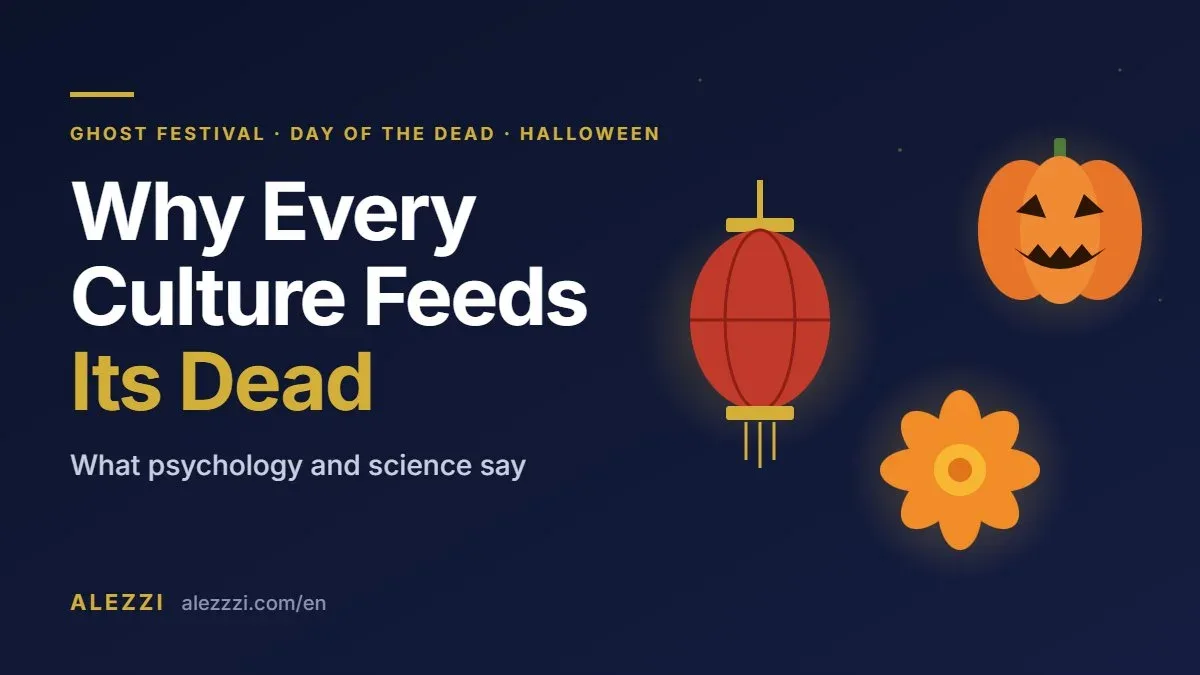
The Day of the Dead, the Hungry Ghost Festival and Halloween look nothing alike. But underneath the costumes, the smoke and the marigolds, they share one very old human idea: the dead come back, and the living should be ready for them.
So how are they really different? And why do humans everywhere keep feeding the dead? Psychology, environmental science and even artificial intelligence have something to say about it.
In this article
- The quick answer
- Hungry Ghost Festival vs Day of the Dead vs Halloween
- The Hungry Ghost Festival: feeding the forgotten
- The Day of the Dead: a family reunion
- Halloween: from Samhain to candy
- Why every culture feeds its dead
- What science says about burning joss paper
- The 21st-century version: AI “griefbots”
- Watch: the three festivals explained
- Frequently asked questions
- More from the afterlife
The quick answer
The Hungry Ghost Festival (China and Southeast Asia, 7th lunar month) feeds and calms spirits, especially those with no family. The Day of the Dead (Mexico, 1 and 2 November) welcomes beloved ancestors home with altars called ofrendas. Halloween (31 October) grew from the Celtic festival of Samhain, when the boundary between worlds was believed to be thin, and is now mostly a fun, secular holiday. All three are built on the belief that the dead return at a set time of year.
Hungry Ghost Festival vs Day of the Dead vs Halloween
| Hungry Ghost Festival | Day of the Dead | Halloween | |
|---|---|---|---|
| Where | China, Hong Kong, Taiwan, Singapore, Malaysia and Chinese communities worldwide | Mexico and Mexican communities worldwide | US, UK, Ireland, Canada and increasingly worldwide |
| When | 15th day of the 7th lunar month (16 August in 2027), within a whole Ghost Month | 1 and 2 November | 31 October |
| Who returns | Ancestors, plus hungry, forgotten or restless ghosts | Beloved family members | Originally spirits and fairies; today mostly a costume theme |
| Mood | Respectful and cautious | Joyful reunion | Playful and spooky |
| Main offering | Food, incense and burned joss paper | Ofrenda altar with food, photos, candles and marigolds | Sweets for trick-or-treaters |
| Main fear | Angry spirits causing bad luck | Forgetting the dead | Mostly none today |
The Hungry Ghost Festival: feeding the forgotten
In Chinese belief, the gates of the underworld open during the seventh lunar month, and spirits wander the world of the living. Families honor their own ancestors, but they also feed the “hungry ghosts”: spirits with no descendants to care for them, or who died violently or unhappily.
The offerings are practical. Food is left out, incense is lit, and huge amounts of joss paper and hell money are burned so the dead can spend it in the afterlife. Many people also avoid risky activities during Ghost Month, such as moving house, swimming at night or getting married.
If you want the full story of the paper money, read our guide Joss Paper and Hell Money: Why Chinese People Burn Paper Money for the Dead.
The Day of the Dead: a family reunion
Día de Muertos is not “Mexican Halloween.” It is a reunion. Families build an ofrenda, a home altar for the people they have lost. According to World History Encyclopedia, an ofrenda can include flowers, photographs of the dead, sweets and other personal mementos, and its candles are left burning through the night so no returning soul is left in darkness.
The tradition blends Indigenous Mexican beliefs with the Catholic feasts of All Saints’ and All Souls’ Day. The Smithsonian’s National Museum of the American Latino has a beautiful collection of family altars and the stories behind them.
Many people around the world first discovered this tradition through Pixar’s film Coco (2017), whose story revolves around a family ofrenda and the fear of being forgotten by the living.
Halloween: from Samhain to candy
Halloween’s roots go back to the Celtic festival of Samhain, which marked the end of the harvest and the start of winter. People believed that the boundary between the living and the dead grew thin at that time. Over the centuries it merged with the Christian All Hallows’ Eve, traveled to North America with Irish and Scottish immigrants, and became the costume-and-candy holiday the world knows today.
Of the three, Halloween has drifted furthest from its original meaning. The dead have become a theme rather than guests.
Why every culture feeds its dead
Three continents, three festivals, one shared idea. Why? Psychologists who study grief have some answers.
1. We do not really “let go”
For much of the 20th century, Western psychology taught that healthy grief meant letting go and moving on. In 1996, researchers Dennis Klass, Phyllis Silverman and Steven Nickman challenged that idea in their book Continuing Bonds: New Understandings of Grief. Their continuing bonds theory argues that keeping a connection with someone who has died is a normal and often healthy part of grieving, not a failure to accept the loss.
Seen this way, an ofrenda, a plate of food for a hungry ghost and a burned paper house are all the same thing: a way to keep the relationship going. Interestingly, one chapter of that book looks at Japanese ancestor worship, an Eastern tradition that had been practicing “continuing bonds” for centuries before psychologists named it.
2. Rituals really do reduce grief
Does performing a ritual actually help, or do people just feel they should? Harvard Business School researchers Michael Norton and Francesca Gino tested this in a series of experiments published in the Journal of Experimental Psychology: General. In their study, “Rituals Alleviate Grieving for Loved Ones, Lovers, and Lotteries”, people who performed rituals after a loss reported lower grief.
Two findings stand out. First, the rituals worked because they gave people a greater sense of control. Second, they helped even people who said they did not believe rituals work. In other words, you do not need to believe the paper money reaches the afterlife for burning it to make you feel better.
3. Fear of angry spirits
The Hungry Ghost Festival adds something the Day of the Dead mostly lacks: fear. Hungry ghosts are dangerous because nobody cares for them. One way to understand this is as a society handling a real worry, the “bad death” of people who died young, far from home or without family, by turning it into a shared, regular duty of care.
What science says about burning joss paper
There is a modern side to this ancient tradition that the spirits probably never anticipated: air pollution.
In 2015, chemists at Nanyang Technological University in Singapore published a study in Environmental Science: Processes and Impacts titled “Annual air pollution caused by the Hungry Ghost Festival”. They compared air and rainwater samples collected over several years and found a clear spike in fine particulate pollution (PM2.5) during the festival months, which they linked directly to the burning of joss paper and incense.
According to reporting on the study, concentrations of individual PM2.5 elements rose by about 18 to 60 percent during the festival months compared with the yearly average. Since then, some town councils in Singapore have tested burners that produce less smoke and ash, and Taoist organizations have encouraged people to burn offerings more sensibly.
The tradition is adapting: some families now burn less, use shared burners, or offer flowers and food instead.
The 21st-century version: AI “griefbots”
Here is the strangest comparison of all. For centuries, families in China burned paper phones and paper cars so their dead could keep living a normal life. Today, technology companies offer something that goes much further: AI chatbots that imitate the dead.
These “deadbots” or “griefbots” are trained on a person’s messages, emails and social media posts so that relatives can keep “talking” to them. In 2024, AI ethicists at the University of Cambridge’s Leverhulme Centre for the Future of Intelligence published a study in the journal Philosophy and Technology warning that these services could cause “unwanted digital hauntings.” They described scenarios in which a deadbot could advertise products in a dead parent’s voice, confuse children, or keep messaging a family that no longer wants to hear from it, and called for safeguards, including ways to “retire” a deadbot with dignity.
It is the oldest human wish, to stay in touch with the people we lose, in its newest form. Ancient China built a whole afterlife economy to keep its dead comfortable. We are building one too, only this time it runs on servers instead of smoke. For the story of how the original version worked, read Paper Money for the Dead: Inside Old China’s Afterlife Economy.
Watch: the three festivals explained
What you need to know about the Chinese Hungry Ghost Festival (South China Morning Post)

What is Day of the Dead? (National Geographic)
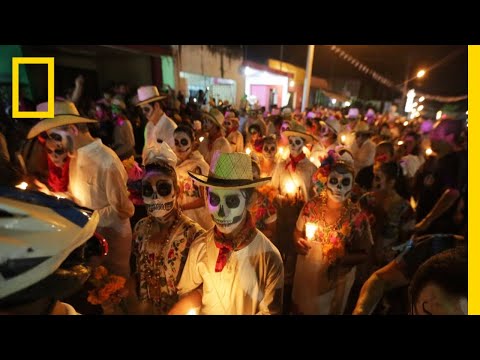
Frequently asked questions
Is the Hungry Ghost Festival the Chinese Halloween?
It is often called that, but the comparison is loose. Both involve spirits returning, but the Hungry Ghost Festival is a serious religious observance about caring for ancestors and calming wandering ghosts, while modern Halloween is mostly a secular celebration.
Is Day of the Dead the same as Halloween?
No. They fall close together and both use skeleton imagery, but the Day of the Dead is a joyful family reunion with the dead on 1 and 2 November, with its own Indigenous and Catholic roots.
When is the Hungry Ghost Festival in 2027?
Monday 16 August 2027, the 15th day of the seventh lunar month.
Why do people leave food for the dead?
In many cultures, the dead are believed to return at certain times and still have needs. Psychologists also point out that offerings help mourners keep a continuing bond with the person they lost, and that rituals can reduce grief by giving people a sense of control.
Do grief rituals work if you do not believe in them?
According to the Harvard study by Norton and Gino, yes. Rituals reduced grief even among participants who did not believe in their effectiveness.
Is burning joss paper bad for the environment?
Large-scale burning does affect local air quality. A 2015 Singapore study found fine particulate pollution rose noticeably during the Hungry Ghost Festival months. Cleaner burners and burning less are common responses.
What is a griefbot?
An AI chatbot that imitates a person who has died, built from their digital messages and posts. Researchers at Cambridge have warned that griefbots need strong safeguards because they can cause emotional harm.